
What Is Lawn Aeration and Why Does Your Lawn Need It?
Compacted soil and excessive thatch can prevent grass roots from accessing the air, water, and nutrients needed for consistent growth. As soil density increases, lawns often develop thin patches, poor drainage, weak color retention, and reduced drought resistance.
Lawn aeration addresses these underlying soil conditions by creating openings that improve root-zone airflow, moisture penetration, and nutrient movement beneath the turf surface. It is commonly used to restore stressed lawns affected by foot traffic, clay-heavy soil, or seasonal compaction.
This blog explains what lawn aeration is, why lawns need it, how to recognize aeration-related problems, and when aeration delivers the best long-term results.
What Is Lawn Aeration?
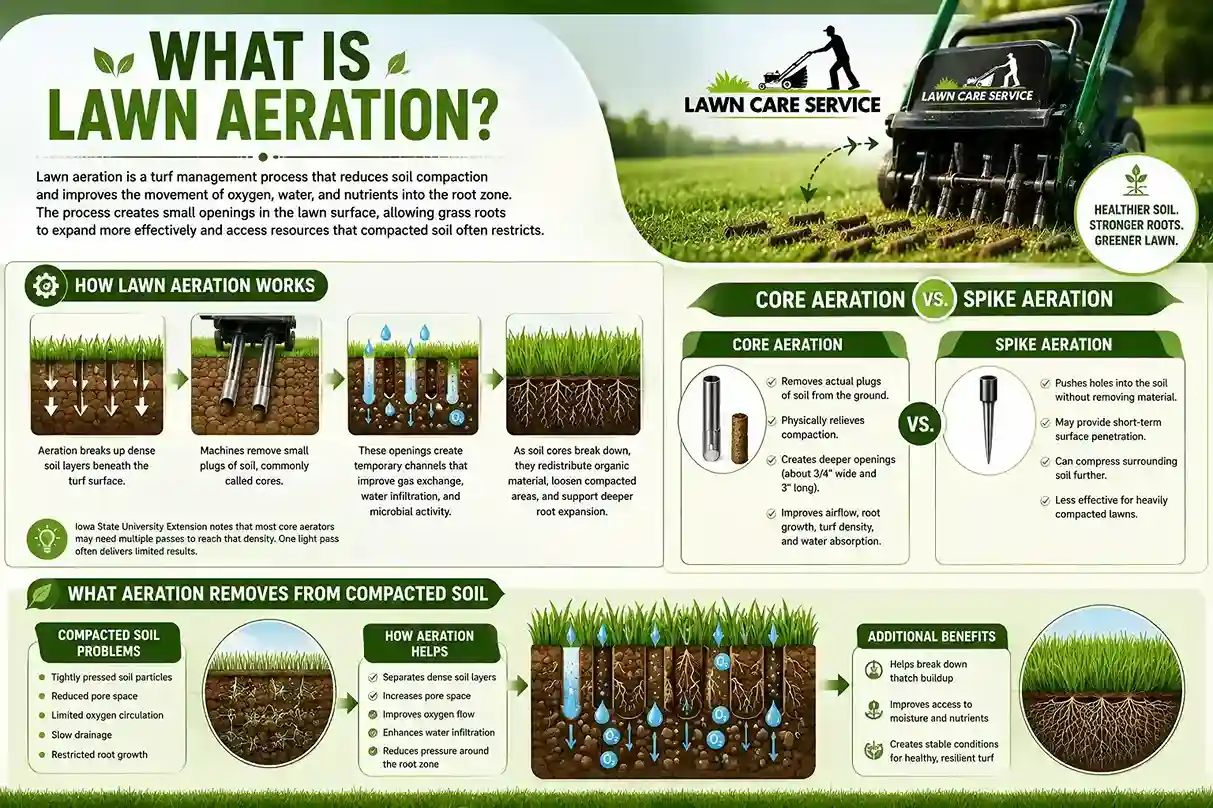
Lawn aeration is a turf management process that reduces soil compaction and improves the movement of oxygen, water, and nutrients into the root zone. The process creates small openings in the lawn surface, allowing grass roots to expand more effectively and access resources that compacted soil often restricts.
How Lawn Aeration Works
Aeration works by breaking up dense soil layers beneath the turf surface. Most residential lawns are aerated using machines that remove small plugs of soil, commonly called cores. These openings create temporary channels that improve gas exchange, water infiltration, and microbial activity around the root system.
As the soil cores break down naturally, they redistribute organic material across the lawn surface. This process also loosens compacted areas that limit root expansion and reduce turf resilience during heat or drought stress.
A properly aerated lawn should have about 20 to 40 holes per square foot for effective soil relief. Iowa State University Extension notes that most core aerators may need multiple passes to reach that density, which is why one light pass often delivers limited results. |
Core Aeration vs. Spike Aeration
Core aeration removes actual plugs of soil from the ground, while spike aeration pushes holes into the soil without extracting material. Core aeration is generally more effective because it physically relieves compaction instead of compressing the surrounding soil further.
Spike aerators may provide short-term surface penetration, but heavily compacted lawns often continue to struggle with restricted airflow and shallow root development. Core aeration delivers deeper soil relief and produces more noticeable improvements in turf density and water absorption.
Core aeration typically removes soil plugs around three-fourths of an inch wide and 3 inches long, creating deeper openings than surface-level spiking. This physical soil removal is what makes core aeration more effective for compacted lawns. |
What Aeration Removes From Compacted Soil
Compacted lawns contain tightly pressed soil particles that reduce pore space beneath the surface. This limits oxygen circulation, slows drainage, and restricts root growth. Aeration increases pore space by separating dense soil layers and reducing pressure around the root zone.
The process also helps manage thatch buildup when excessive organic matter begins trapping moisture near the surface instead of allowing it to move into the soil. By improving subsurface access, aeration creates more stable growing conditions for healthy turf development.
Why Your Lawn Needs Aeration
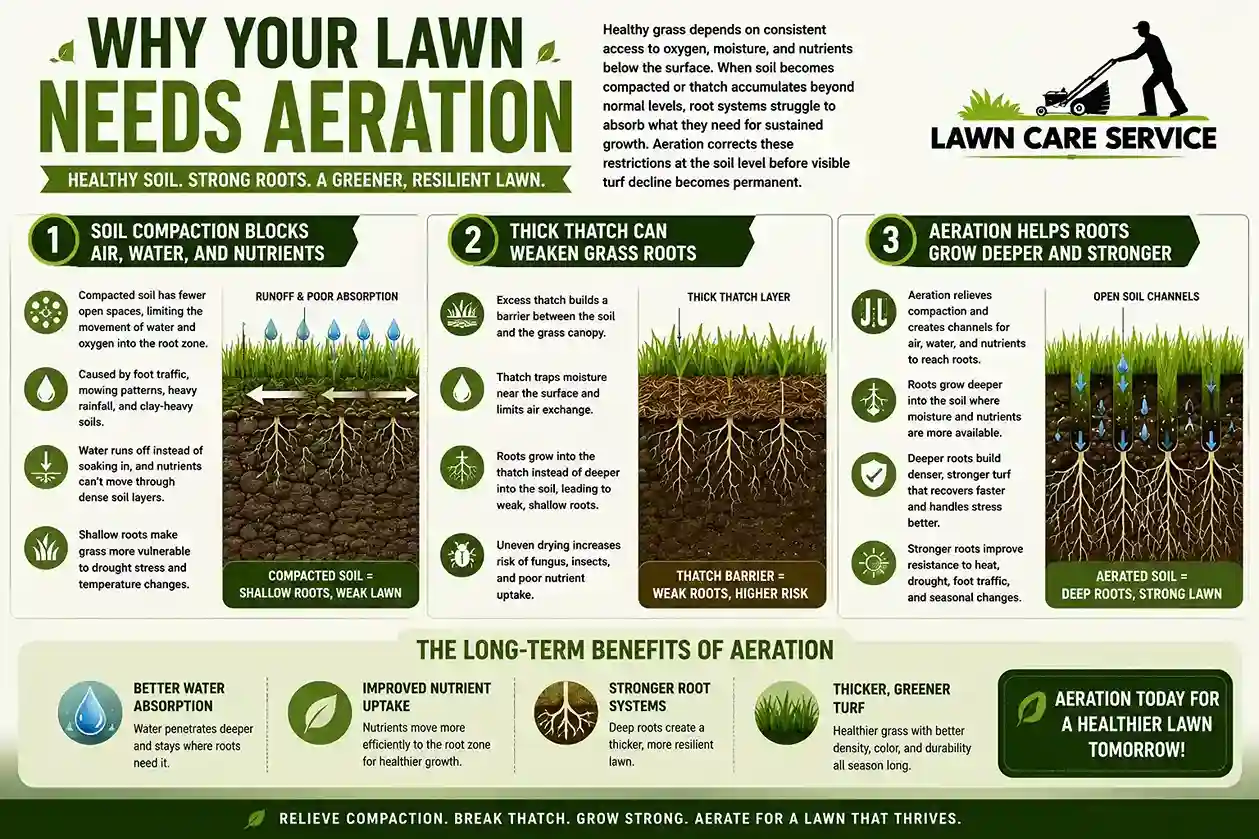
Healthy grass depends on consistent access to oxygen, moisture, and nutrients below the surface. When soil becomes compacted or thatch accumulates beyond normal levels, root systems struggle to absorb what they need for sustained growth. Aeration corrects these restrictions at the soil level before visible turf decline becomes permanent.
Soil Compaction Blocks Air, Water, and Nutrients
Compacted soil contains fewer open spaces between soil particles, which limits the movement of water and oxygen into the root zone. This often develops from repeated foot traffic, mowing patterns, heavy rainfall, or clay-dominant soil structures.
As compaction increases, water begins running off the surface instead of penetrating the ground. Fertilizer efficiency also declines because nutrients cannot move evenly through dense soil layers. Grass roots remain shallow under these conditions, making the lawn more vulnerable to drought stress and temperature fluctuations.
Thick Thatch Can Weaken Grass Roots
A thin thatch layer is normal in most lawns, but excessive buildup creates a barrier between the soil and the turf canopy. Thick thatch traps moisture near the surface and limits proper air exchange beneath the grass.
This environment can encourage shallow rooting because roots begin growing into the thatch layer instead of deeper into the soil. Lawns with heavy thatch also dry unevenly and become more susceptible to fungal activity, insect pressure, and inconsistent nutrient uptake.
Aeration Helps Roots Grow Deeper and Stronger
Aeration creates conditions that support deeper root penetration and more stable turf growth. Once compacted soil loosens, roots can expand into lower soil layers where moisture and nutrients remain more consistent during dry periods.
Deeper root systems improve turf density, recovery speed, and overall lawn durability. Grass with stronger root development typically handles heat stress, mowing pressure, and seasonal weather shifts more effectively than lawns growing in compacted or oxygen-restricted soil.
Signs Your Lawn May Need Aeration
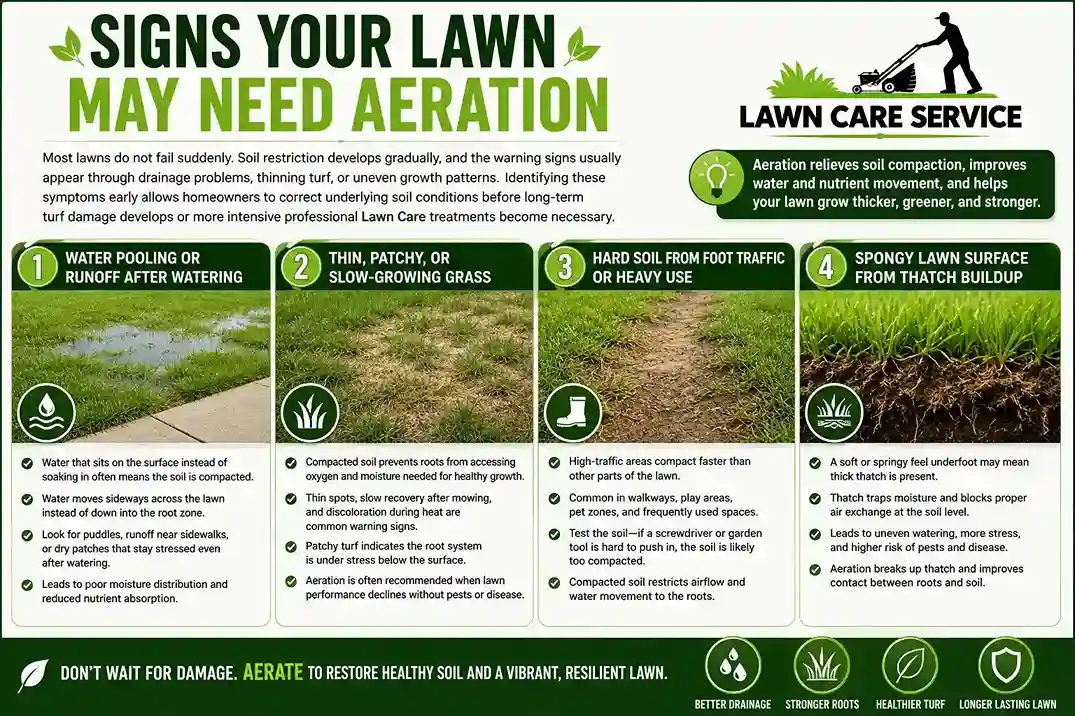
Most lawns do not fail suddenly. Soil restriction develops gradually, and the warning signs usually appear through drainage problems, thinning turf, or uneven growth patterns.
Identifying these symptoms early allows homeowners to correct underlying soil conditions before long-term turf damage develops or more intensive professional Lawn Care treatments become necessary.
Water Pooling or Runoff After Watering
Water that sits on the surface instead of soaking into the soil often indicates compaction beneath the turf layer. Dense soil restricts infiltration, forcing irrigation or rainfall to move sideways across the lawn rather than downward into the root zone.
This condition commonly produces puddling, runoff near sidewalks, or dry patches that remain stressed even after watering. Lawns experiencing repeated surface runoff typically struggle with inconsistent moisture distribution and reduced nutrient absorption.
Thin, Patchy, or Slow-Growing Grass
Grass growing in compacted soil often develops uneven density because roots cannot access enough oxygen or moisture to sustain uniform growth. Thin sections may appear despite regular watering and fertilization.
Slow recovery after mowing, discoloration during heat, and patchy turf coverage are common indicators that the root system is under stress below the surface. Aeration is frequently recommended by professionals when turf performance declines without obvious pest or disease activity.
Hard Soil From Foot Traffic or Heavy Use
Areas exposed to repeated pressure compact faster than low-traffic portions of the lawn. Walkways, play areas, pet zones, and frequently used outdoor spaces often develop hardened soil that limits root expansion.
A simple indicator is difficulty pushing a screwdriver or garden tool into the ground. If the soil feels dense and resistant, airflow and water movement beneath the surface are likely restricted as well.
Spongy Lawn Surface From Thatch Buildup
A lawn that feels soft or springy underfoot may contain excessive thatch accumulation above the soil line. Thick thatch traps moisture and organic debris, preventing proper interaction between the soil and the root system.
This condition can create uneven watering patterns and increase stress during humid or wet conditions. Aeration helps disrupt this layer and improves contact between the turf roots and the underlying soil structure.
A thatch layer becomes a concern when it reaches more than half an inch thick. University of Illinois Extension notes that core aeration can help manage thatch by bringing soil and microbes to the surface, where they help break down excess organic buildup. |
When Is the Best Time to Aerate a Lawn?

Aeration produces the strongest results when the grass is actively growing and capable of recovering quickly after soil disruption. Timing affects root regeneration, turf density, and the lawn’s ability to fill in exposed areas after the aeration process. Aerating during the wrong season can slow recovery and reduce overall effectiveness.
Best Timing for Cool-Season Grass
Cool-season grasses such as Kentucky bluegrass, perennial ryegrass, and fescue respond best to aeration during early fall or early spring. These grasses grow most aggressively when soil temperatures are moderate and moisture levels are more stable.
Fall aeration is typically preferred because cooler temperatures reduce heat stress while allowing roots to strengthen before winter dormancy. It also creates favorable conditions for overseeding, helping new grass establish more efficiently alongside existing turf.
Best Timing for Warm-Season Grass
Warm-season grasses such as Bermuda grass, zoysia, and St. Augustine grass should generally be aerated in late spring to early summer. This period aligns with peak active growth, allowing the lawn to recover quickly and spread into aerated areas.
Aerating warm-season turf too early can delay recovery if soil temperatures remain low. Performing the process during active growth improves root expansion and reduces the risk of exposed soil remaining thin or stressed for extended periods.
Why Aeration Should Match Active Growth Periods
Aeration temporarily places stress on the lawn by opening the soil surface and disturbing compacted areas. Grass that is actively growing can repair these openings faster through root development and lateral turf spread.
Matching aeration with the lawn’s natural growth cycle also improves nutrient uptake, moisture retention, and seed establishment if overseeding is performed simultaneously. Proper timing increases the likelihood of long-term turf improvement instead of short-term surface recovery.
How Lawn Aeration Improves Long-Term Lawn Health
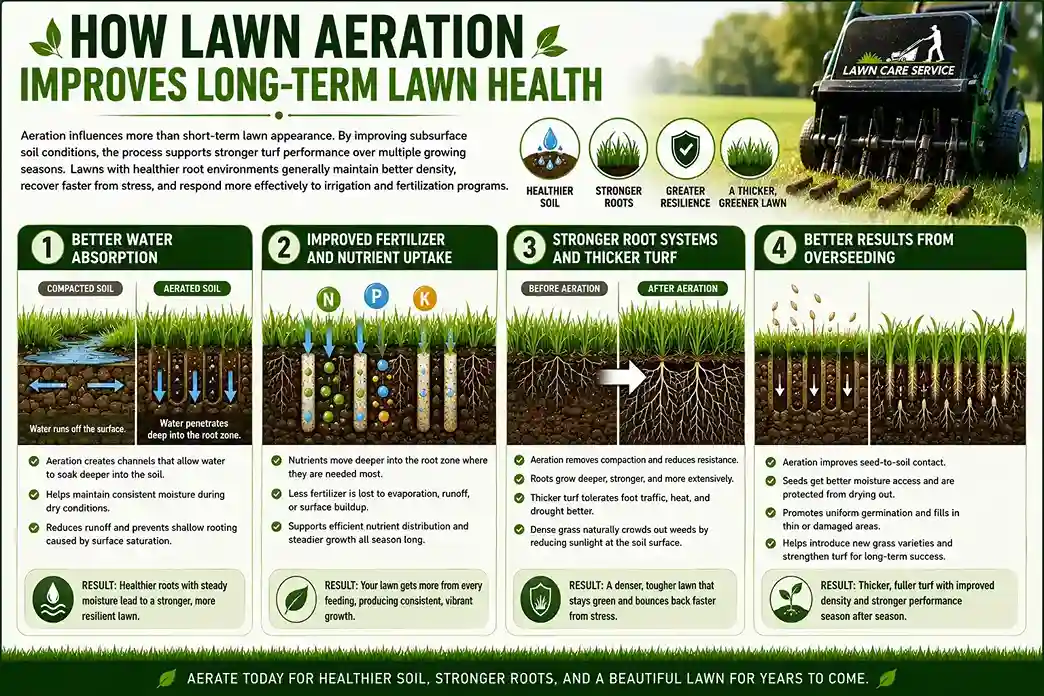
Aeration influences more than short-term lawn appearance. By improving subsurface soil conditions, the process supports stronger turf performance over multiple growing seasons. Lawns with healthier root environments generally maintain better density, recover faster from stress, and respond more effectively to irrigation and fertilization programs.
Better Water Absorption
Compacted lawns often lose significant moisture through runoff because water cannot move efficiently into dense soil layers. Aeration increases infiltration by creating openings that allow water to penetrate deeper into the root zone instead of remaining near the surface.
Improved absorption helps maintain more consistent soil moisture during dry conditions and reduces uneven watering patterns across the lawn. This also lowers the likelihood of shallow rooting caused by frequent surface saturation.
Improved Fertilizer and Nutrient Uptake
Nutrients move through aerated soil more effectively because the root zone has greater access to oxygen and moisture. Fertilizer applications are less likely to remain concentrated near the surface, where nutrients can evaporate, wash away, or become unavailable to the grass roots.
This creates more efficient nutrient distribution beneath the turf canopy and supports steadier growth throughout the active season. Lawns with reduced compaction also tend to respond more consistently to seasonal feeding schedules.
Stronger Root Systems and Thicker Turf
Grass develops stronger root systems when soil structure allows deeper penetration and healthier biological activity. Aeration reduces physical resistance around the roots, creating conditions that support denser and more stable turf growth.
Thicker turf coverage improves the lawn’s ability to tolerate foot traffic, heat exposure, and drought-related stress. Dense grass also limits the available space for weed establishment by reducing sunlight exposure at the soil surface.
Better Results From Overseeding
Aeration is commonly paired with overseeding because the openings created in the soil improve seed-to-soil contact. Seeds that settle into aerated holes receive better moisture access and are more protected from surface drying or displacement.
This combination supports more uniform germination and helps fill thin or damaged sections more effectively. Overseeding after aeration is often used to improve turf density, introduce newer grass cultivars, and strengthen the lawn against seasonal stress conditions.
Should You Aerate Your Lawn Yourself or Hire a Professional?
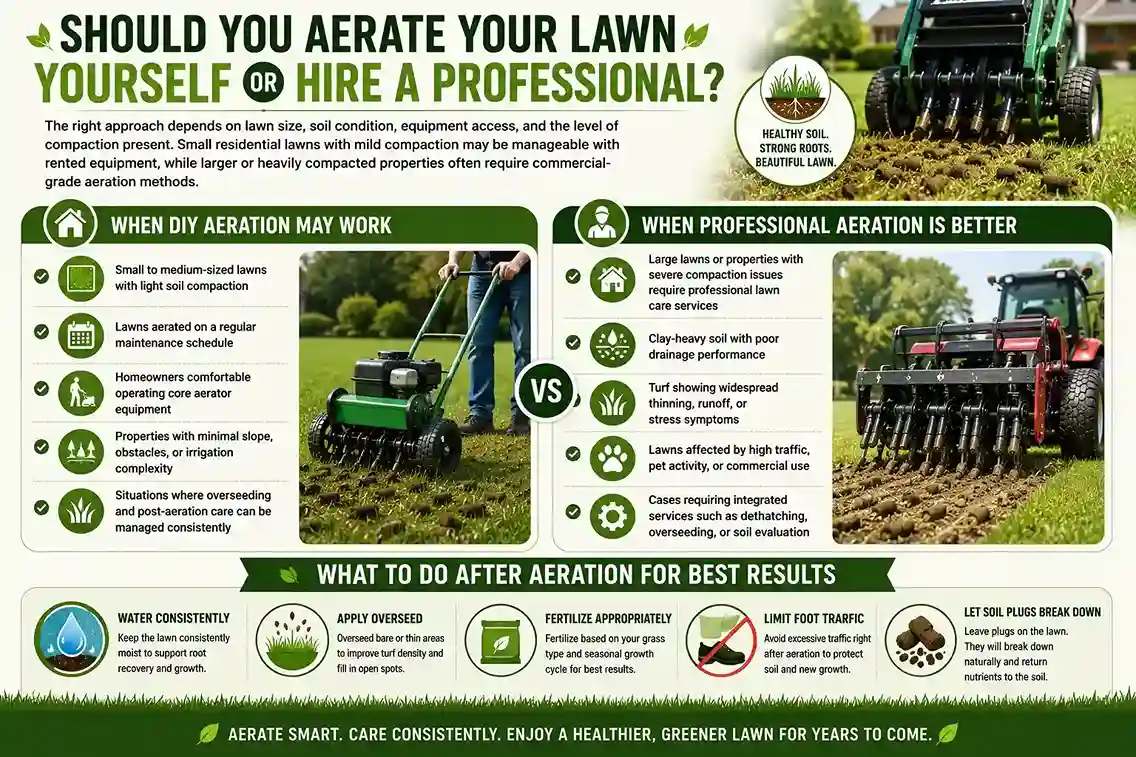
The right approach depends on lawn size, soil condition, equipment access, and the level of compaction present. Small residential lawns with mild compaction may be manageable with rented equipment, while larger or heavily compacted properties often require commercial-grade aeration methods.
When DIY Aeration May Work
- Small to medium-sized lawns with light soil compaction
- Lawns aerated on a regular maintenance schedule
- Homeowners comfortable operating core aerator equipment
- Properties with minimal slope, obstacles, or irrigation complexity
- Situations where overseeding and post-aeration care can be managed consistently
When Professional Aeration Is Better
- Large lawns or properties with severe compaction issues require professional lawn care services
- Clay-heavy soil with poor drainage performance
- Turf showing widespread thinning, runoff, or stress symptoms
- Lawns affected by high traffic, pet activity, or commercial use
- Cases requiring integrated services such as dethatching, overseeding, or soil evaluation
What to Do After Aeration for Best Results
- Water the lawn consistently to support root recovery
- Apply overseed if turf density needs improvement
- Fertilize based on grass type and seasonal growth cycle
- Avoid excessive traffic immediately after aeration
- Allow soil plugs to break down naturally across the lawn surface