
How to Get a Thick, Green Lawn Year-Round
| Key Takeaways:A thick, green lawn starts with healthy soil, the right grass type, and proper mowing height, because weak roots and compacted soil limit turf density. Deep watering supports stronger root growth, while shallow watering keeps roots near the surface and makes grass more vulnerable to heat stress. Fertilizer works best when applied during active growth cycles, with balanced nutrients that support both green color and long-term root strength. Bare spots, weeds, and recurring dead patches should be corrected early because exposed soil allows weed pressure, moisture imbalance, and turf thinning to spread. Preventive maintenance, like aeration, overseeding, irrigation checks, and seasonal care adjustments, helps maintain dense, resilient turf year-round. |
A thick, green lawn depends on root strength, soil performance, mowing height, watering depth, and seasonal nutrient timing, not surface-level watering or random fertilizer use. Thin patches, pale grass, weeds, and recurring dead spots usually point to stress below the turf canopy.
Year-round lawn density comes from building conditions that let grass recover, spread, and compete naturally. This blog explains the core lawn care practices that keep turf thicker, greener, and more resilient across changing seasons.
Step 1: Build a Strong Lawn Foundation Before Focusing on Appearance
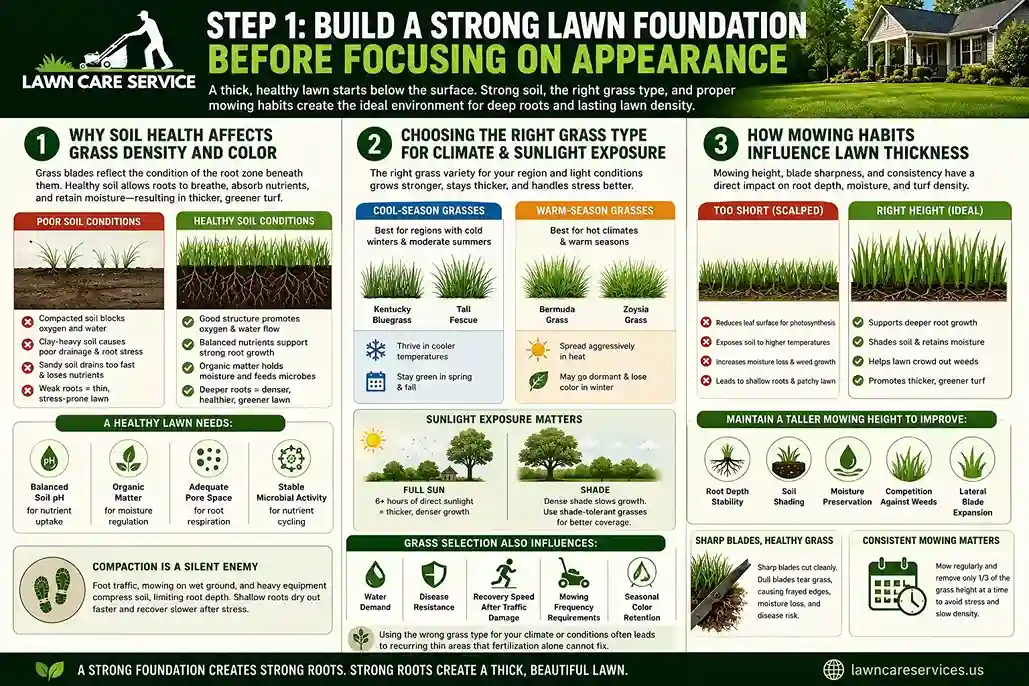
Most lawns lose density because the underlying growing conditions cannot support consistent turf recovery. Grass color and thickness are direct outputs of root oxygen access, nutrient availability, soil structure, moisture retention, and turf compatibility with local climate conditions.
Why Soil Health Affects Grass Density and Color
Grass blades reflect the condition of the root zone beneath them. Compacted or nutrient-deficient soil restricts oxygen movement, microbial activity, and water infiltration, which weakens root expansion and reduces chlorophyll production.
Clay-heavy soil often creates drainage bottlenecks that keep roots saturated for extended periods. This limits oxygen exchange and increases susceptibility to fungal stress. Sandy soil creates the opposite problem by draining too quickly and reducing nutrient retention. Both conditions reduce turf density when not corrected.
A healthy lawn typically requires:
- Balanced soil pH for nutrient uptake efficiency
- Organic matter for moisture regulation
- Adequate pore space for root respiration
- Stable microbial activity for nutrient cycling
Soil compaction is one of the most common causes of thinning turf. Frequent foot traffic, mowing on wet ground, and heavy equipment compress the soil profile, making it difficult for roots to penetrate deeply. Shallow root systems dry out faster during heat exposure and recover more slowly after stress.
Choosing the Right Grass Type for Climate and Sunlight Exposure
Grass performance depends heavily on temperature tolerance, growth behavior, and sunlight availability. A turf variety adapted to regional climate conditions maintains density more consistently because it operates within its optimal growth range.
Cool-season grasses such as Kentucky bluegrass and tall fescue perform better in regions with moderate summers and colder winters. Warm-season grasses such as Bermuda and Zoysia spread aggressively under high temperatures but lose color during dormancy periods.
Sunlight exposure also affects turf thickness. Dense tree coverage reduces photosynthetic activity and slows lateral spreading. In shaded lawns, shade-tolerant turf varieties typically maintain coverage more effectively than sun-dependent grasses that thin under reduced light conditions.
Grass selection also influences:
- Water demand
- Disease resistance
- Recovery speed after traffic damage
- Mowing frequency requirements
- Seasonal color retention
Using incompatible turf species often creates recurring thinning patterns that fertilization alone cannot correct.
How Mowing Habits Influence Lawn Thickness
Mowing height directly affects root depth, moisture retention, and turf density. Cutting grass too short reduces the leaf surface responsible for photosynthesis, forcing the plant to redirect stored energy toward blade recovery instead of root development.
Short mowing heights also expose soil to higher surface temperatures, accelerating moisture evaporation and increasing weed germination rates. This is why scalped lawns frequently develop patchy growth and discoloration during summer stress periods.
Maintaining a taller mowing height improves:
- Root depth stability
- Soil shading
- Moisture preservation
- Turf competition against weeds
- Lateral blade expansion
Sharp mower blades are equally important. Dull blades tear grass tissue instead of cutting cleanly, creating frayed leaf edges that lose moisture faster and become more vulnerable to disease infection.
Consistent mowing frequency prevents excessive blade removal in a single cycle. Removing too much grass height at once places the turf under recovery stress and temporarily slows density development.
Step 2: Water and Fertilize the Lawn Based on Growth Cycles
Grass growth rate, nutrient demand, and moisture consumption change throughout the year. Lawns that receive the same watering and fertilization pattern year-round often develop inconsistent color, weak turf recovery, and seasonal stress damage because the turf is being managed against its natural growth cycle.
Deep Watering vs Shallow Watering for Root Strength
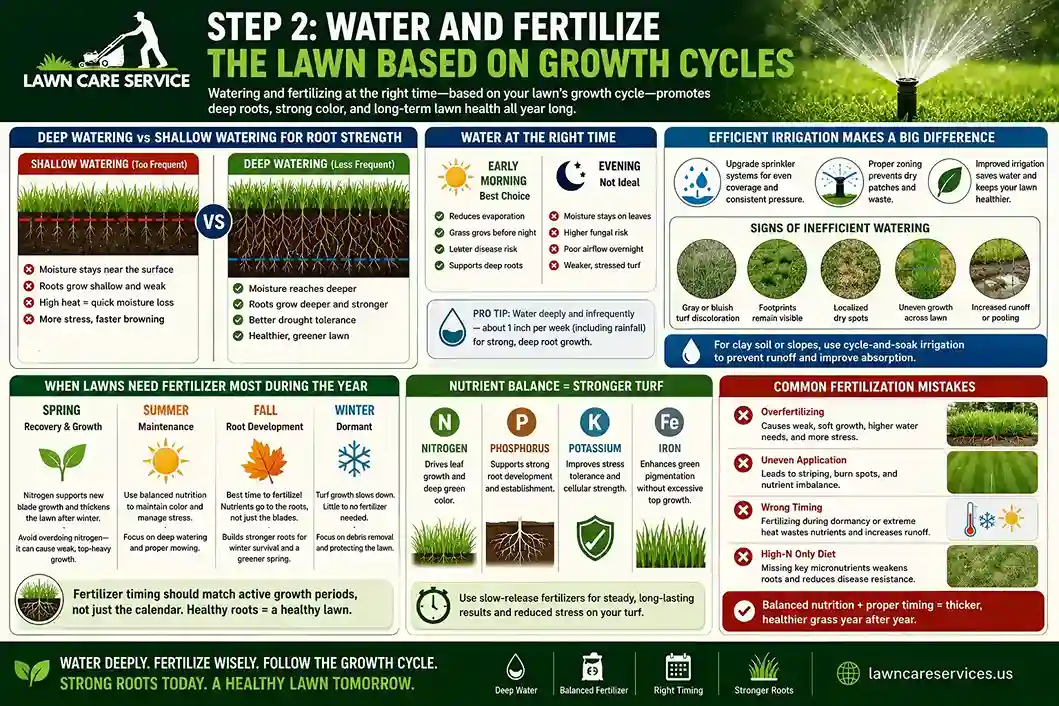
Frequent shallow watering keeps moisture concentrated near the soil surface, which trains turf roots to remain in the upper soil layer. These shallow root systems become highly vulnerable during heat spikes because the surface zone loses moisture rapidly under direct sunlight and wind exposure.
Deep watering changes the moisture profile inside the soil column. Water moves further downward, encouraging roots to expand vertically toward deeper moisture reserves. Turf with deeper rooting zones maintains color longer during drought conditions and experiences less thermal stress during high-temperature periods.
Irrigation timing also affects turf performance. Early morning watering reduces evaporation loss and allows leaf surfaces to dry before nighttime humidity increases. Evening irrigation often leaves extended surface moisture on grass blades, increasing fungal development risk under warm overnight conditions.
Properties with uneven moisture distribution often require sprinkler system installation upgrades to improve watering coverage, pressure consistency, and zone control. Inefficient irrigation layouts commonly create dry patches, runoff concentration, and inconsistent root-zone saturation across different lawn sections.
Signs of inefficient watering patterns include:
- Gray or bluish turf discoloration
- Footprints remaining visible after walking
- Localized dry spots
- Uneven growth rates across the lawn
- Increased surface runoff during irrigation
| Did you know? The U.S. EPA WaterSense program, in their watering tips, last updated on March 11, 2026, notes that landscapes commonly need about one inch of water per week, including rainfall, but watering too frequently can create shallow roots, pooling, weed growth, fungal pressure, and stormwater runoff. For lawns with clay soil or slopes, cycle-and-soak irrigation allows water to absorb in intervals instead of running off the surface. |
When Lawns Need Fertilizer Most During the Year
Fertilizer timing should align with active turf growth periods instead of calendar-based scheduling. Grass absorbs nutrients most efficiently when root activity and blade development are naturally accelerating.
During spring recovery, nitrogen supports blade production and canopy thickening after winter dormancy. However, excessive spring nitrogen can overstimulate top growth, forcing the lawn to consume stored energy reserves too quickly before summer stress arrives.
Fall fertilization typically produces stronger long-term turf performance because the grass redirects nutrients toward root storage and carbohydrate accumulation instead of aggressive blade growth. This improves winter survival and spring green-up consistency.
Nutrient balance also affects turf behavior:
- Nitrogen drives leaf growth and color intensity
- Phosphorus supports root establishment
- Potassium improves stress tolerance and cellular strength
- Iron enhances green pigmentation without excessive blade growth
Slow-release fertilizers generally produce more stable turf performance because nutrients become available gradually instead of creating rapid growth surges that increase mowing demand and stress sensitivity.
Common Fertilization Mistakes That Weaken Turf Over Time
Overfertilization increases blade growth faster than the turf can physiologically support. This creates softer leaf tissue with higher moisture demand and lower stress resistance during temperature fluctuations.
Uneven fertilizer distribution creates visible striping patterns where some areas receive excessive nutrient concentration while others remain nutrient-deficient. Excess nitrogen accumulation can also chemically burn turf tissue, especially during high heat conditions or inadequate irrigation.
Applying fertilizer during dormant or heat-stressed periods reduces nutrient utilization efficiency because the turf is not actively metabolizing at normal rates. Unused nutrients may leach below the root zone or contribute to runoff during rainfall.
Another common issue is relying exclusively on high-nitrogen fertilizer blends without monitoring micronutrient balance. Turf may appear temporarily greener while underlying nutrient deficiencies continue affecting root metabolism and disease resistance.
Consistent turf density depends more on controlled nutrient management than aggressive feeding schedules. Lawns maintained under balanced fertility programs typically develop steadier growth patterns and stronger seasonal recovery performance.
Step 3: Control Weeds, Bare Spots, and Thinning Areas Early
Thin turf creates open space for weed invasion, moisture imbalance, and uneven lawn recovery. Once turf density decreases, competing vegetation and localized stress conditions spread faster because the lawn canopy can no longer regulate surface temperature, sunlight exposure, or nutrient distribution efficiently.
Why Weeds Compete Directly With Healthy Turf Growth
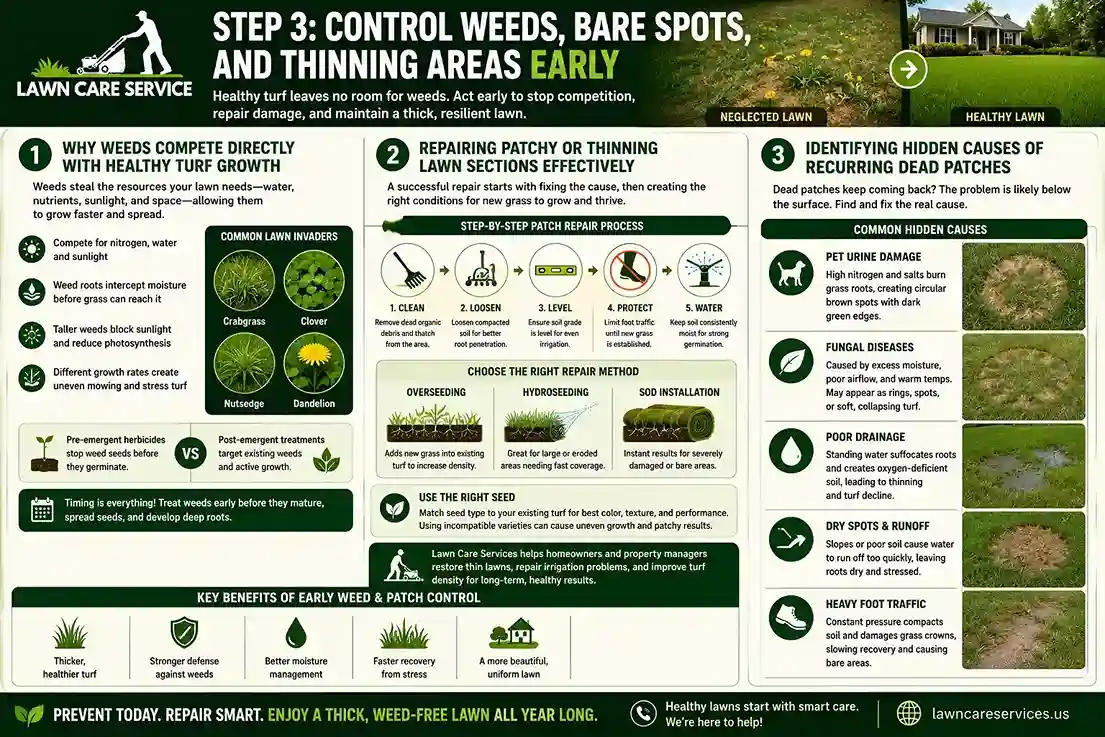
Weeds aggressively consume the same resources required for turf development, particularly nitrogen, water, and sunlight. Fast-growing broadleaf weeds and invasive grassy weeds often establish faster than weakened turf because they tolerate environmental stress more efficiently.
Crabgrass, clover, nutsedge, and dandelions commonly spread through lawns with inconsistent turf coverage or exposed soil. Their root systems intercept moisture before surrounding grass can access it, while taller weed structures reduce sunlight penetration into the turf canopy.
Weed pressure also changes mowing dynamics. Some invasive species grow at different rates than turfgrass, creating uneven mowing surfaces that reduce lawn uniformity and increase mechanical stress on healthy grass sections.
Pre-emergent herbicides target weed seed germination before visible growth begins, while post-emergent treatments address active infestations already competing with the turf. Application timing matters because ineffective timing allows weeds to mature, spread seed, and establish deeper root systems that are harder to suppress.
Repairing Patchy or Thinning Lawn Sections Effectively
Bare spots usually indicate localized failure within the growing environment rather than isolated cosmetic damage. Successful repair depends on correcting the underlying condition before reseeding or turf replacement begins.
Overseeding increases turf density by introducing new grass plants into thinning areas without removing the existing lawn. However, seed establishment depends heavily on seed-to-soil contact, moisture consistency, and competition control during early germination stages.
Patch recovery improves when:
- Dead organic debris is removed before seeding
- Compacted surface layers are loosened
- Soil grade remains level for even irrigation
- Temporary traffic reduction protects germinating seedlings
Seed selection should match the surrounding turf type to prevent visible texture and color inconsistencies. Mixing incompatible grass varieties often produces uneven growth behavior and inconsistent mowing response.
Hydroseeding and sod installation may accelerate recovery in severely damaged sections, especially where erosion or large-scale thinning prevents stable germination conditions.
Lawn Care Services works with homeowners and property managers dealing with thinning turf, irrigation inefficiencies, patch repair, and long-term lawn recovery issues. The company provides lawn care, sprinkler installation, irrigation repair, and landscape maintenance services focused on improving turf density, moisture distribution, and seasonal lawn performance.
Identifying Hidden Causes of Recurring Dead Patches
Repeated turf failure in the same location usually signals unresolved environmental or biological stress rather than maintenance inconsistency. Surface-level regrowth treatments often fail because the root cause remains active below the canopy.
Pet urine damage typically creates concentrated nitrogen and salt accumulation, leading to circular burn patterns with dark green outer edges. Fungal diseases create different symptoms depending on moisture levels, airflow restriction, and temperature conditions. Some diseases produce ring-shaped discoloration, while others create soft, collapsing turf tissue.
Localized drainage failure also contributes to chronic thinning. Areas that remain saturated after rainfall often develop oxygen-deficient root zones that weaken turf persistence over time. Conversely, slopes and elevated areas may dry excessively due to runoff concentration and reduced moisture retention.
Heavy foot traffic compresses turf crowns and reduces recovery speed, particularly around walkways, play zones, and entry points. In these areas, repeated mechanical stress eventually exceeds the grass plant’s regenerative capacity, resulting in exposed soil and thinning patterns that continue expanding if traffic flow remains unchanged.
Step 4: Adjust Lawn Care Practices for Seasonal Stress Conditions
Seasonal stress changes turf behavior at the physiological level. Temperature fluctuations, dormancy cycles, humidity variation, and inconsistent rainfall patterns alter water demand, growth speed, nutrient utilization, and disease vulnerability throughout the year.
Lawns maintained under static maintenance routines often lose density because the turf is not being managed according to seasonal stress response patterns.
Protecting Lawns During Extreme Summer Heat
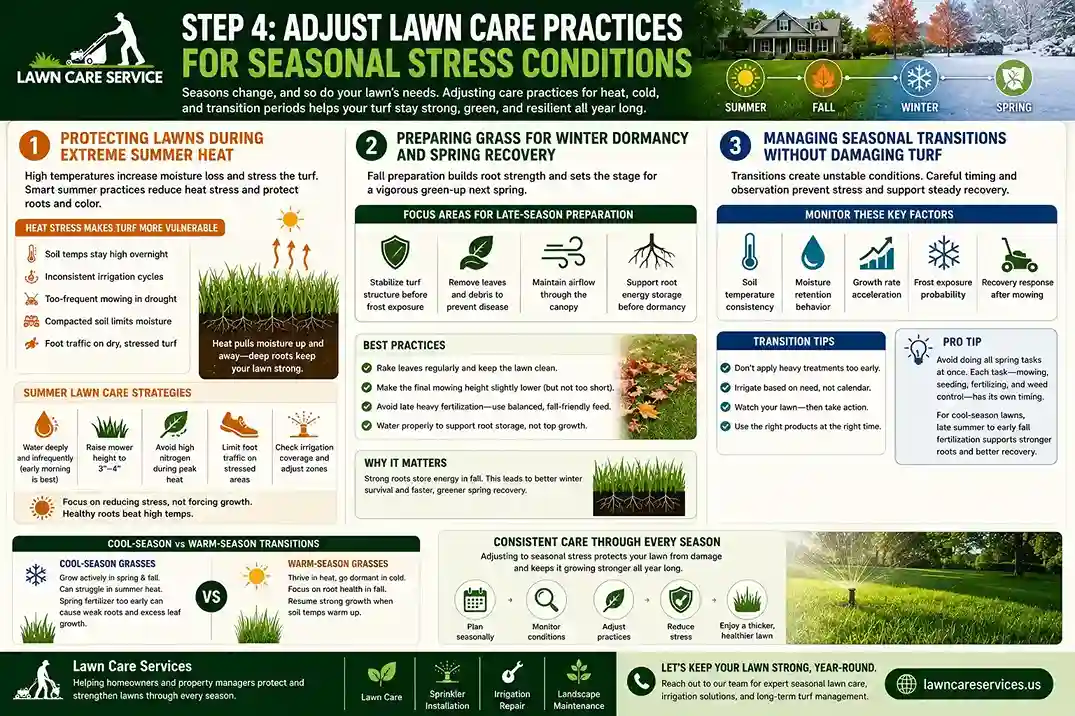
High surface temperatures increase evapotranspiration rates, forcing turf to lose moisture faster than roots can replenish it. Once heat stress intensifies, grass shifts energy away from blade production and prioritizes survival functions, resulting in slower growth, reduced color intensity, and weakened traffic recovery.
Heat-stressed turf becomes more vulnerable when:
- Soil temperatures remain elevated overnight
- Irrigation cycles are inconsistent
- Mowing frequency remains aggressive during drought conditions
- Surface compaction restricts moisture movement
Summer lawn management should focus on reducing physiological stress instead of forcing excessive top growth. High nitrogen application during peak heat periods often accelerates moisture consumption and increases tissue sensitivity under prolonged sunlight exposure.
Traffic control also becomes critical during summer stress. Repeated foot traffic compresses dehydrated turf crowns and increases mechanical damage because the grass plant cannot regenerate efficiently under thermal stress conditions.
Preparing Grass for Winter Dormancy and Spring Recovery
As temperatures decline, turf begins redirecting energy into carbohydrate storage and root stabilization before dormancy develops. Lawns entering winter under nutrient imbalance or excessive blade length typically experience weaker spring recovery and inconsistent green-up patterns.
Late-season lawn preparation focuses on:
- Stabilizing turf structure before frost exposure
- Reducing disease-conducive debris accumulation
- Maintaining airflow within the canopy
- Supporting root energy storage before dormancy
Leaf accumulation creates light blockage and moisture-trapping conditions that increase fungal activity during colder months. Extended debris coverage can also weaken turf by restricting gas exchange at the surface level.
Final mowing cycles should gradually reduce turf height without exposing the crown tissue excessively before freezing temperatures arrive. Extremely tall grass increases matting risk under snow or moisture accumulation, while excessively short turf becomes more vulnerable to cold-weather desiccation.
Managing Seasonal Transitions Without Damaging Turf
Seasonal transition periods create unstable growth conditions because turf recovery rates fluctuate while environmental stress factors continue shifting rapidly. Early spring lawns often appear weak because root activity has not fully synchronized with blade growth demand.
Applying aggressive treatments too early during seasonal transition periods can destabilize turf recovery patterns. For example, heavy irrigation during cool soil conditions may increase fungal pressure before the lawn reaches active metabolic growth.
Transition management depends on monitoring:
- Soil temperature consistency
- Moisture retention behavior
- Growth rate acceleration
- Frost exposure probability
- Recovery response after mowing cycles
Warm-season and cool-season grasses also transition differently between dormancy and active growth phases. Misaligned maintenance timing during these periods commonly produces temporary thinning, discoloration, or delayed turf recovery.
| Pro Tip: University of Illinois Extension, published on March 5, 2026, advises against doing all spring lawn tasks at the same time because mowing, seeding, fertilizing, and weed control each have different ideal timing windows. For cool-season lawns, early spring fertilizer can push leafy growth at the expense of root development, while late summer to early fall is often better for recovery-focused feeding. |
Lawn Care Services works with residential and commercial properties across the US, managing seasonal turf stress, irrigation performance issues, lawn recovery cycles, and long-term landscape maintenance requirements. Reach out to the team for lawn care, irrigation system repair, sprinkler installation, and long-term turf management solutions designed for consistent seasonal lawn performance.
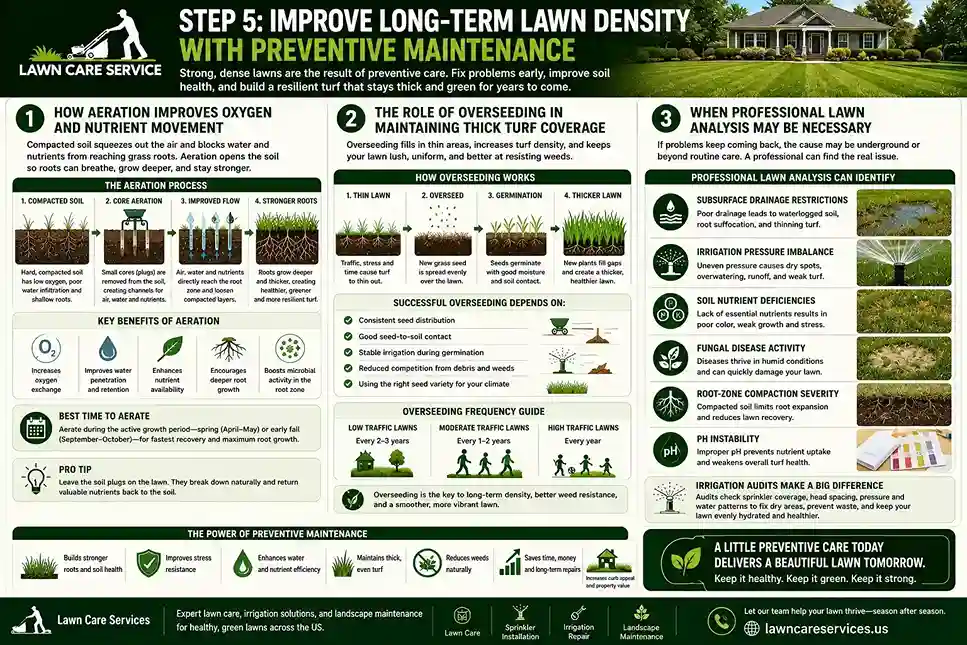
Step 5: Improve Long-Term Lawn Density With Preventive Maintenance
Lawns that maintain consistent density over multiple seasons typically operate under preventive maintenance systems rather than reactive repair cycles. Turf degradation often begins below the surface before visible thinning appears, which is why long-term lawn performance depends on correcting structural limitations before widespread decline develops.
How Aeration Improves Oxygen and Nutrient Movement
Compacted soil restricts the movement of oxygen, water, and nutrients through the root zone. As compaction increases, pore space decreases, limiting root respiration and reducing the turf’s ability to absorb moisture efficiently during active growth periods.
Core aeration mechanically removes small plugs of soil, creating vertical channels that improve:
- Oxygen exchange within the root zone
- Water penetration depth
- Nutrient mobility through compacted layers
- Root expansion capacity
- Microbial activity around turf roots
Aeration becomes especially important in lawns exposed to repeated traffic pressure or heavy clay soil conditions. Without periodic pressure relief, compacted areas gradually develop slower recovery rates, reduced turf spread, and inconsistent color retention.
Timing also affects aeration effectiveness. Performing aeration during active turf growth periods allows grass to recover quickly while maximizing new root expansion into loosened soil channels.
The Role of Overseeding in Maintaining Thick Turf Coverage
Even healthy lawns naturally lose turf density over time due to seasonal stress, traffic wear, drought exposure, and biological aging within the grass stand. Overseeding counteracts this decline by continuously introducing newer grass plants into the canopy before visible thinning becomes severe.
Dense turf coverage improves lawn stability because tightly packed grass plants reduce exposed soil availability and create stronger competition against invasive vegetation. Overseeding also helps maintain visual uniformity by filling low-density zones before patch formation expands.
Successful overseeding depends on:
- Consistent seed distribution
- Adequate seed-to-soil contact
- Stable irrigation during germination
- Reduced competition from existing debris
- Proper alignment between seed variety and regional climate conditions
Overseeding frequency varies based on turf species, environmental exposure, and lawn usage intensity. High-traffic lawns often require more aggressive density maintenance because mechanical wear continuously reduces turf regeneration capacity.
When Professional Lawn Analysis May Be Necessary
Some turf problems persist despite consistent mowing, irrigation, and fertilization because the underlying issue extends beyond routine maintenance variables. Repeated thinning patterns, chronic discoloration, and localized turf decline often require diagnostic evaluation rather than additional surface treatments.
Professional lawn analysis may identify:
- Subsurface drainage restrictions
- Irrigation pressure imbalance
- Soil nutrient deficiencies
- Fungal disease activity
- Root-zone compaction severity
- pH instability affecting nutrient uptake
Irrigation audits are particularly important in lawns with inconsistent moisture distribution. Uneven spray coverage, incorrect sprinkler head spacing, and pressure fluctuations frequently create recurring stress zones that standard watering adjustments cannot fully correct.